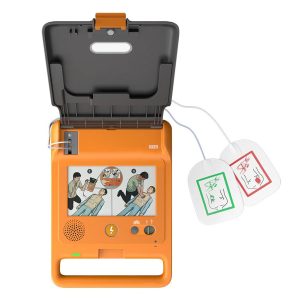
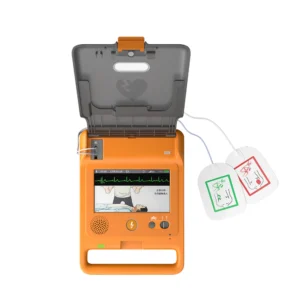
Most people walk past an automated external defibrillator (AED) in a mall or gym and think, “I hope a doctor is nearby if that’s ever needed.” But the truth is, it might be too late by the time a doctor arrives. The hero of a cardiac arrest isn’t usually a person in a white coat, it’s the person closest to the box.
Sudden cardiac arrest vs heart attack
It is a common misconception that a heart attack and sudden cardiac arrest are the same, but understanding the difference can be life-saving.
A heart attack is essentially a “plumbing” problem. It occurs when a blocked artery prevents oxygen-rich blood from reaching a section of the heart muscle and the heart typically continues to beat. [1]
Sudden cardiac arrest is an “electrical” failure where the heart’s internal rhythm malfunctions, causing it to beat irregularly or stop. This instantly halts blood flow to the brain and vital organs, leading to death within minutes if the rhythm isn’t reset. Therefore,it is an immediate crisis that requires an AED to “reboot” the system.
AEDs ARE LIFESAVERS: THE GOLDEN 3 MINUTES
An AED is a lightweight, portable medical device that delivers an electrical shock through the chest to the heart when someone collapses from sudden cardiac arrest. [2]
The Golden 3 Minutes can mean the difference between life and death. [3]
1. Irreversible Brain Injury Within 4 Minutes
When the heart stops, the brain is the first organ to suffer as it does not store oxygen, so brain cells begin to die within 4 minutes.
2. Every 60 Seconds Counts for 10% Survival Rates
The chances of survival decrease by 7% to 10% with every minute that passes without restoring a normal heartbeat.
3. The “Reset” vs. The “Pause”: Defibrillation and CPR
CPR, the “Pause Button” manually pumps oxygenated blood to the brain to delay cell death while AED, the “Reset Button” delivers electrical shock to the heart to beat on its own again.
GUIDE ON HOW TO USE AN AED
AEDs are often compact, lightweight with user-friendly design that allows fast operation. In addition, AEDs also come with text instructions or visual screens, and voice guidance to provide clear rescue instructions, making the rescue process an easy job even during an emergency.
AEDs shall be used in public places or health facilities by persons who have been trained in CPR and the equipment’s operation, by medical personnel who have been trained in Basic Life Support and Advanced Life Support, or by operators under the guidance of the emergency dispatcher.
If you are using COMEN F1/F2A AED, patients that are younger than 8 years old or less than 25kg should adopt PEDIATRIC MODE.
1. Confirm the patient is having sudden cardiac arrest (without respiration/ abnormal respiration). Call medical emergency service immediately.
2. Take out the AED from the box, open the lid. Listen to the voice prompts.
3. Checking on the patient type (Adult/ Child).
4. Remove clothing from the patient’s chest, ensure the patient’s skin is clean and dry.
5. Place the electrode pads on the patient according to the instruction on the pad package.
6. Do not touch the patient and wait for the device to analyze the heart rhythm.
7. Do not touch the patient and wait for the voice prompt. It will either administer the shock automatically or provide instructions for when to deliver the shock.
8. If no shock is needed, perform CPR for 2 minutes.
***If the CPR time expires and shock is required, repeat Step 6.
***If the patient is responsive or with normal respiration, assess the patient’s condition constantly and wait for emergency medical services.
(Sources: Obtained from Comen F1/F2A User Manual)
References:
2. https://www.myheart.org.sg/techniques/what-is-aed/
4. https://gleneagles.com.my/accident-emergency/aed
Disclaimer:
This article is intended for general reference and suggestion purposes only. Please consult relevant authorities or professionals for official guidance.