
After we measure a person’s body weight and height, Body Mass Index (BMI) is often measured which is a very quick and safe way to determine the BMI categories and chronic disease risk. [1]
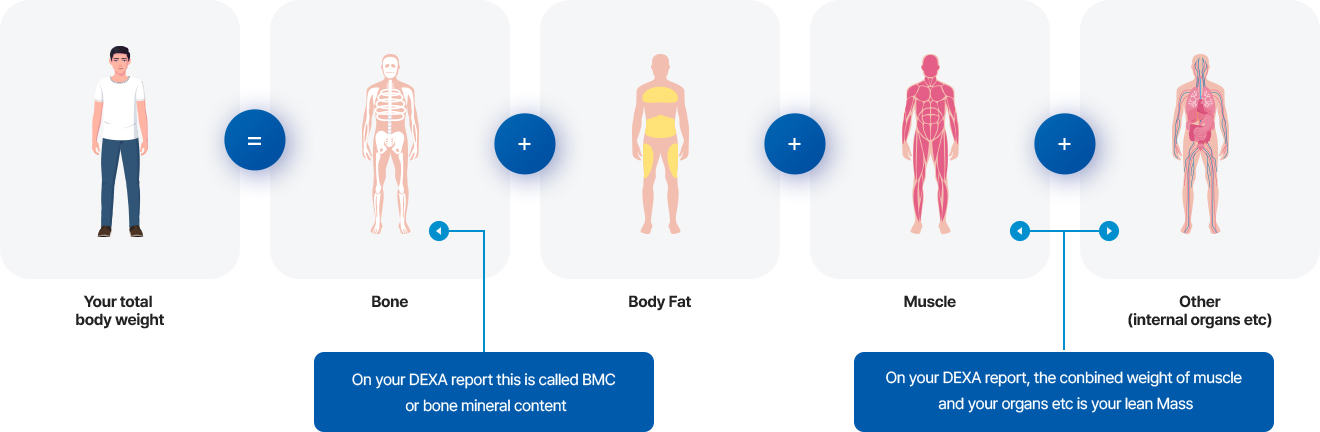
However, BMI does not measure and distinguish a person’s body fat, muscle and bone mass directly which contribute to a person’s total weight. In addition, BMI also does not indicate where in the body that people carry fat. This means that someone with a high muscle mass might be categorized as overweight or obese even if their body fat percentage is normal. [2]
Understand Fat and Muscle
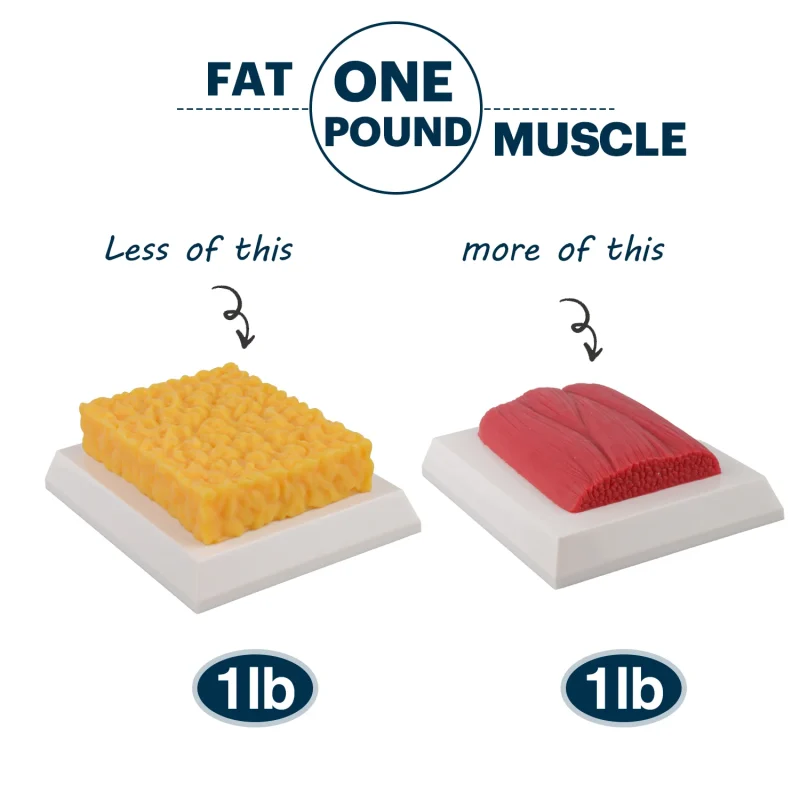
Muscle loss naturally occurs with aging. This means that we should actually build and maintain normal muscle mass. Maintaining a healthy level of skeletal muscle mass improved the quality of life by enhancing physical abilities and bone density.
Excess body fat is associated with higher risk of obesity, diabetes, cardiovascular diseases. A normal range of body fat serves as an energy reserve in our body by regulating glucose and cholesterol.
Gaining Weight in Muscle or Fat?
You may be gaining weight but also appear leaner and more toned. A pound of muscle takes up less space compared to a pound of fat. This is because the muscle is denser and it has a smaller volume compared to fat. [3] Research also indicates that BMI has a 19.6% false-negative rate when identifying between heavy musculature and high body fat. [4] Therefore, a healthy BMI can be misleading because it does not reveal the exact weight of body fat, muscle and bone mass.
While Dual-Energy X-ray Absorptiometry (DEXA) is considered the gold standard for body composition analysis, its usage is limited by radiation exposure, high costs, and often only available in hospitals. Bioelectrical Impedance Analysis (BIA) serves as a practical alternative in hospital (outpatient department), clinic, wellness center, pharmacy and gym fitness sector.
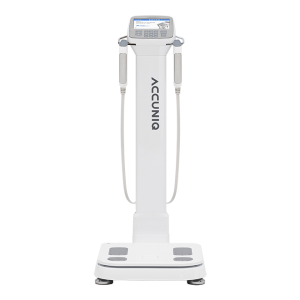
ACCUNIQ BIA: The Precision of a Clinical Scan
ACCUNIQ’s technology provides the precision of a medical-grade scan without the high costs or radiation exposure. It boasts a proven 98% correlation to DEXA (Dual-energy X-ray Absorptiometry). [4]
The Technology: The 4-Compartment (4C) Model
Unlike basic smart scales, ACCUNIQ’s technology is based on the 4-Compartment (4C) Model. Combining data from DEXA, Heavy Water Dilution, Underwater Body Density and Physical Measurements.
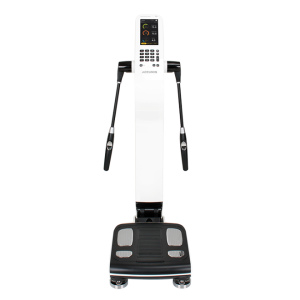
By using multi-frequency currents and tetra-polar electrodes with 8 touch electrodes, ACCUNIQ penetrates the cell membrane to get a true map of what is happening inside the body.
A Tool for Every Professional Segment
(Hospital, Clinic, Wellness and Fitness Centers)
-
Obesity and Abdominal Obesity Analysis:
Differentiate between healthy subcutaneous fat and dangerous visceral fat accumulation linked to metabolic syndrome and heart disease.
-
Skeletal Muscle Mass Index (SMI):
Manage and prevent sarcopenia (muscle wasting) early, preserve clients’ muscle strength and maintain mobility as they age.
-
Extracellular Water (ECW) Ratio:
Detects early signs of water retention, injury or inflammation. It also acts as an early warning system for kidney or heart complications.
-
Phase angle:
Understand the overall cell, nutrition, and health status of the body, and further, use it as a prognostic indicator for metabolic diseases including cancer and various serious diseases.
-
Body Composition History:
Easy tracking on client’s progression and effectiveness of the programme by comparing previous and current measurements.
-
Control Guide:
Weight control guidance by understanding desirable weight, how much muscle and fat needs to be gained or lost.
A weighing scale tells you your weight, but ACCUNIQ tells you your health. By moving past the “one-size-fits-all” approach of BMI, healthcare professionals should start creating customized plans based on how each client is uniquely built.
Because everyone is shaped differently, your health strategy should be too.
References:
1.https://www.cdc.gov/bmi/about/index.html#:~:text=Although%20BMI%20does%20not%20directly,expensive%20and
%20not%20widely%20available.
2. https://islandhospital.com/body-composition-analysis/
3. https://health.clevelandclinic.org/muscle-vs-fat-weight
4. https://pmc.ncbi.nlm.nih.gov/articles/PMC6165971/
5. https://www.accuniq.com/en/research/technology_bc_intro.php
Disclaimer:
This article is intended for general reference and suggestion purposes only. Please consult relevant authorities or professionals for official guidance.
Body Composition Analysis
Body Composition Analysis
Body Composition Analysis